Place details
Sa Bovida
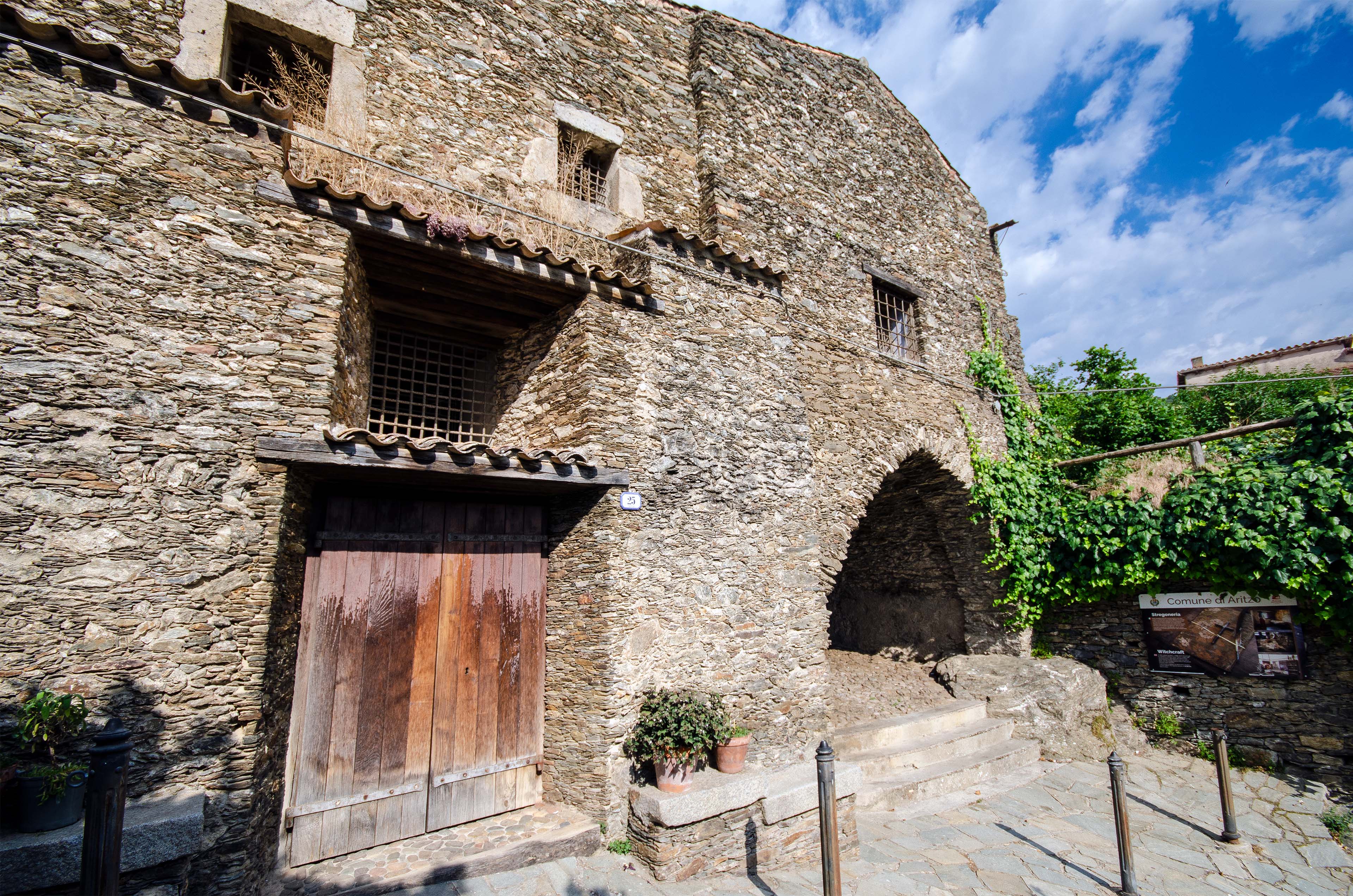
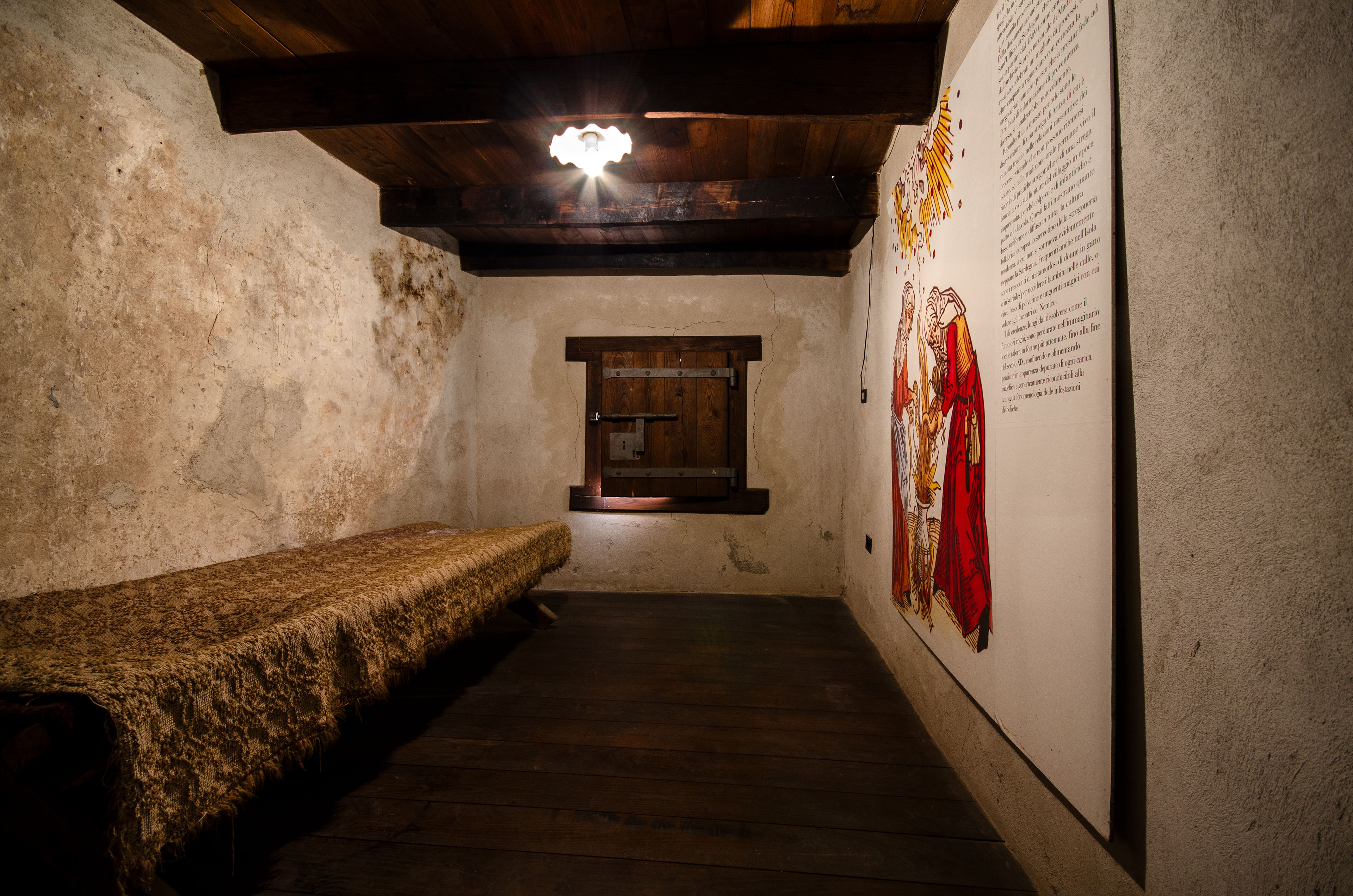
The “Sa Bovida” prison dates back to the 16th century and was built using schist stone with a mixture of mud and lime mortar. Its name comes from the Spanish word Bóveda, meaning “vault”, referring to the pointed vaulted underpass that characterises the building.
From the 1800s, the prison served as a district jail—a place of temporary detention. Before that time, the justice system imposed other forms of punishment: minor crimes were penalised with fines, corporal punishment, or forced labour, while more serious offences could result in exile or even the death penalty.
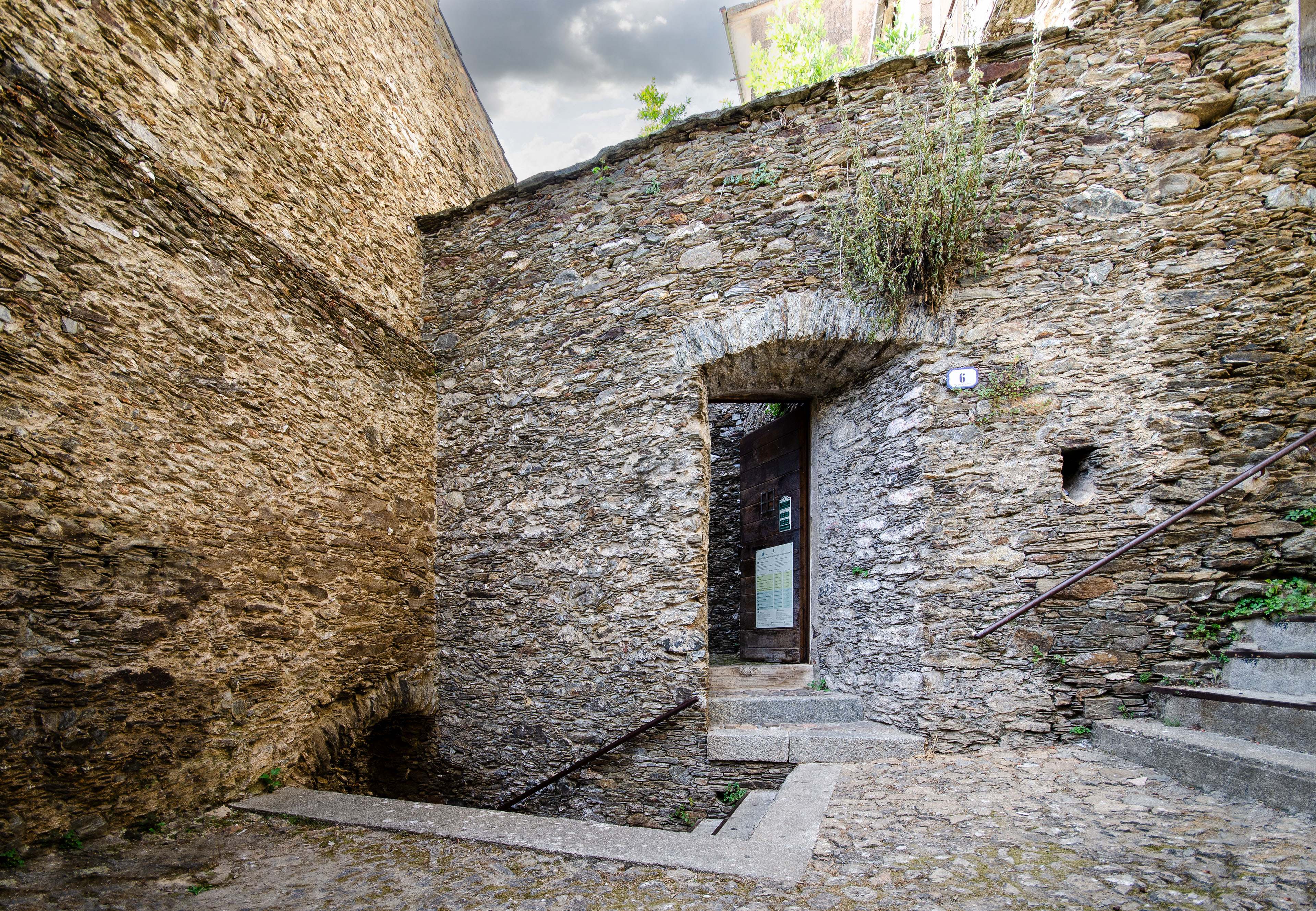
The building is divided over two levels. On the ground floor, there is a large cell that held male prisoners. It could only be accessed via a trapdoor from the floor above. On the upper floor, there are two female cells, a surveillance room, and another multipurpose room that over time served different functions: as an archive, a cell, the custodian’s quarters, a space for visits with the royal official, and even a room visited by the inquisitor, who inspected all the villages on the island once a year.
The offences that could lead to imprisonment varied. The most common was livestock theft, known as abigeato, but other crimes included burglary, assault, acts of violence against people or property, environmental offences such as arson or intimidation, and even accusations of witchcraft.
Living conditions were extremely harsh, with cold and hunger being constant companions. Prisoners were initially required to provide their own food. Only later did the state begin to offer basic sustenance, which remained insufficient. In Aritzo, a charitable association of women collected donations to provide inmates with food and clothing.
Prisoners’ health was entrusted to the village surgeon. The jail was not run by a police force but by a private custodian under contract.
Historical records show that in 1854, the prison could hold up to 12 men in the main cell and 3 women on the upper floor. In 1793, six French soldiers captured at Margine Rosso, near Cagliari, were held here during Napoleon’s failed attempt to invade Sardinia.
Via Francesco Crispi, 25, 08031 Aritzo NU, Italia
Map
Visit guide

Witchcraft was a complex and unsettling phenomenon that blended ancient pagan religious and magical beliefs—such as the cults of Diana or Herodias, deeply rooted in European traditions—with the Church’s theological doctrines about the devil, developed to combat these very practices.
To eliminate what it deemed heretical, the Church established the Inquisition—a special tribunal tasked with investigating and suppressing beliefs considered contrary to Catholic orthodoxy.
Those accused of witchcraft were mostly women who practiced magic, healing, or divination. Many were also midwives or involved in abortion practices. In a cultural setting rich with magical and religious beliefs, these women were seen as capable of both healing and causing harm through curses or spells.
Witches—known in Sardinian as Bruxas, Mayargias, or Cogas—were charged with serious crimes and believed to be in league with the devil. Captured by the Inquisition, they were subjected to physical and psychological torture to extract confessions and were then sentenced to severe punishments: exile, flogging, or, in the most extreme cases, execution by burning.
Between 1492 and 1708, around 4,000 witchcraft trials were held in Sardinia.
One documented case is that of Antonia Usay, a woman from Aritzo tried by the Inquisition in the late 1500s. She was accused of apostasy, idolatry, making a pact with the devil, practicing necromancy for divination, and of summoning storms of wind and rain. She was sentenced by the Inquisition to public disgrace during an Auto-da-fé—the formal proclamation of the inquisitor’s sentence, followed by a public act of penance or, in severe cases, execution by fire.
.

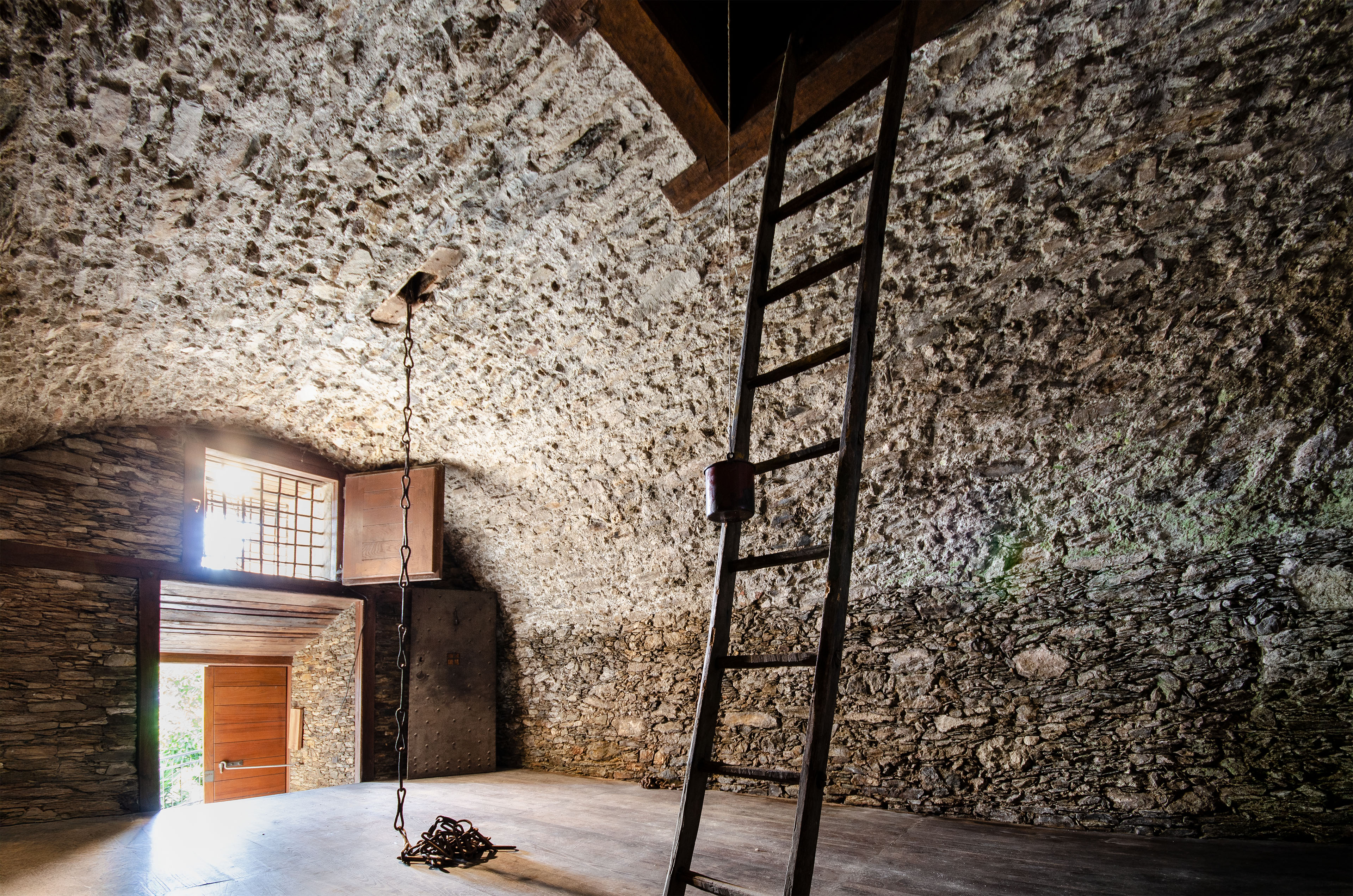
The men’s cell was originally a fully enclosed space, accessible only from above through a trapdoor using a rope ladder. The large wooden door visible today was added in modern times during restoration works to convert the building into a museum.
The walls, now bare stone, were once covered with a thick layer of lime plaster to prevent prisoners from digging tunnels and attempting to escape. The original floor consisted of overlapping wooden beams laid in alternating directions, some of which extended into the walls.
During the coldest months, temperatures inside the cell dropped drastically, and it was not uncommon for prisoners to die from the cold. Sanitary conditions were extremely poor: inmates relieved themselves in a pit with no outlet, forcing them to endure unbearable smells.
The most unruly prisoners were restrained with a chain around the neck, used as a means of coercion and torture. Food was lowered through the trapdoor in a tin can tied to a small cord.
The photograph on display shows two well-known fugitives from the Barbagia region—one from Aritzo, the other from Gadoni—captured after nineteen years on the run.

This space, once used as a guardroom, has simple and essential lines. The bare walls and exposed roof tiles evoke the domestic atmosphere of a traditional kitchen, complete with the fireplace and charcoal stoves. Despite its function as a place of control and surveillance, it recalls the everyday life of women in the past.
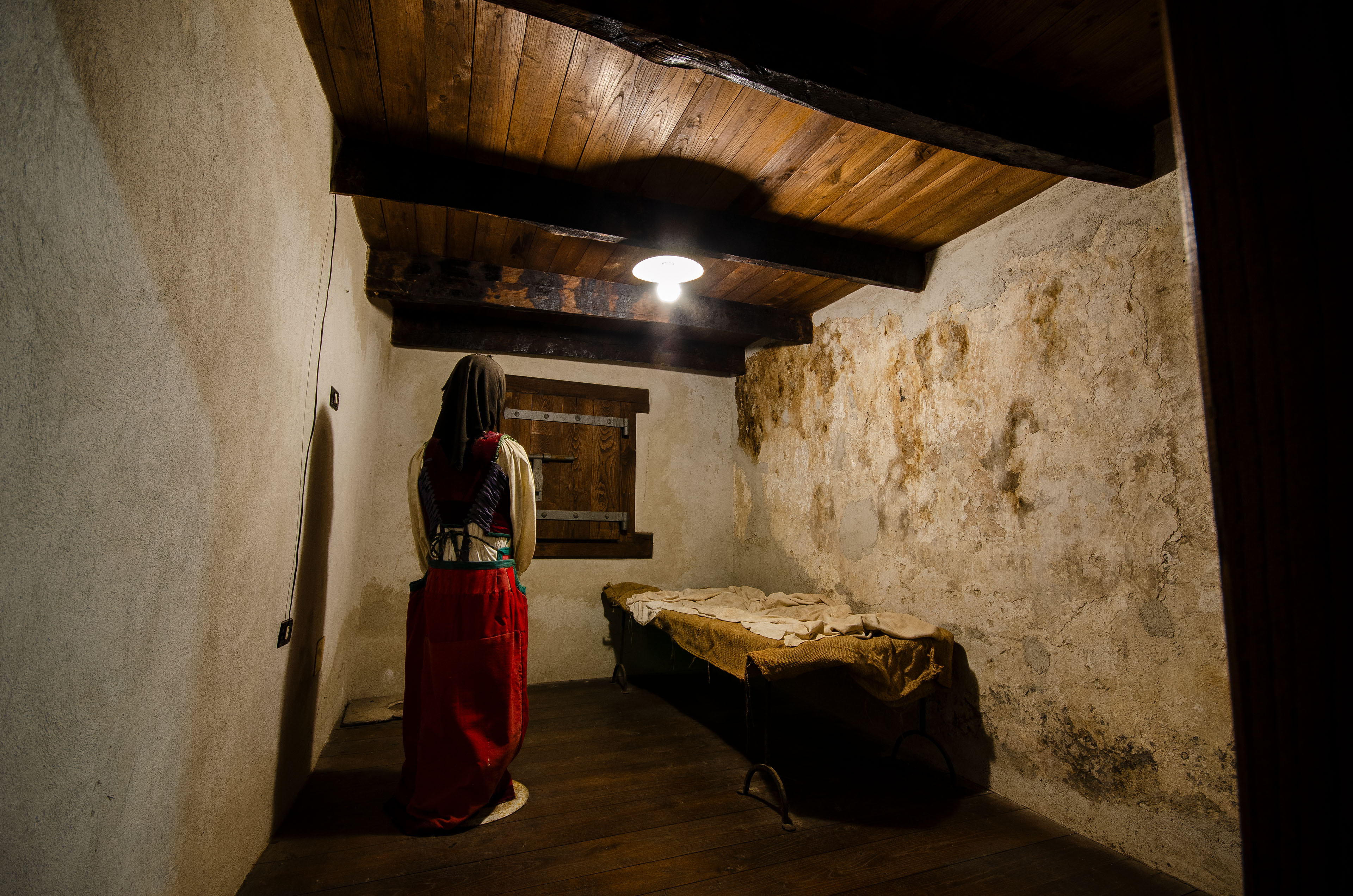
Next to the guardroom are two small cells once designated for female prisoners. Though narrow, these rooms offered relatively more dignified conditions than other prisons of the time: plastered walls whitewashed with lime, and a wooden ceiling that insulated them from the roof, helping protect against cold and dampness.
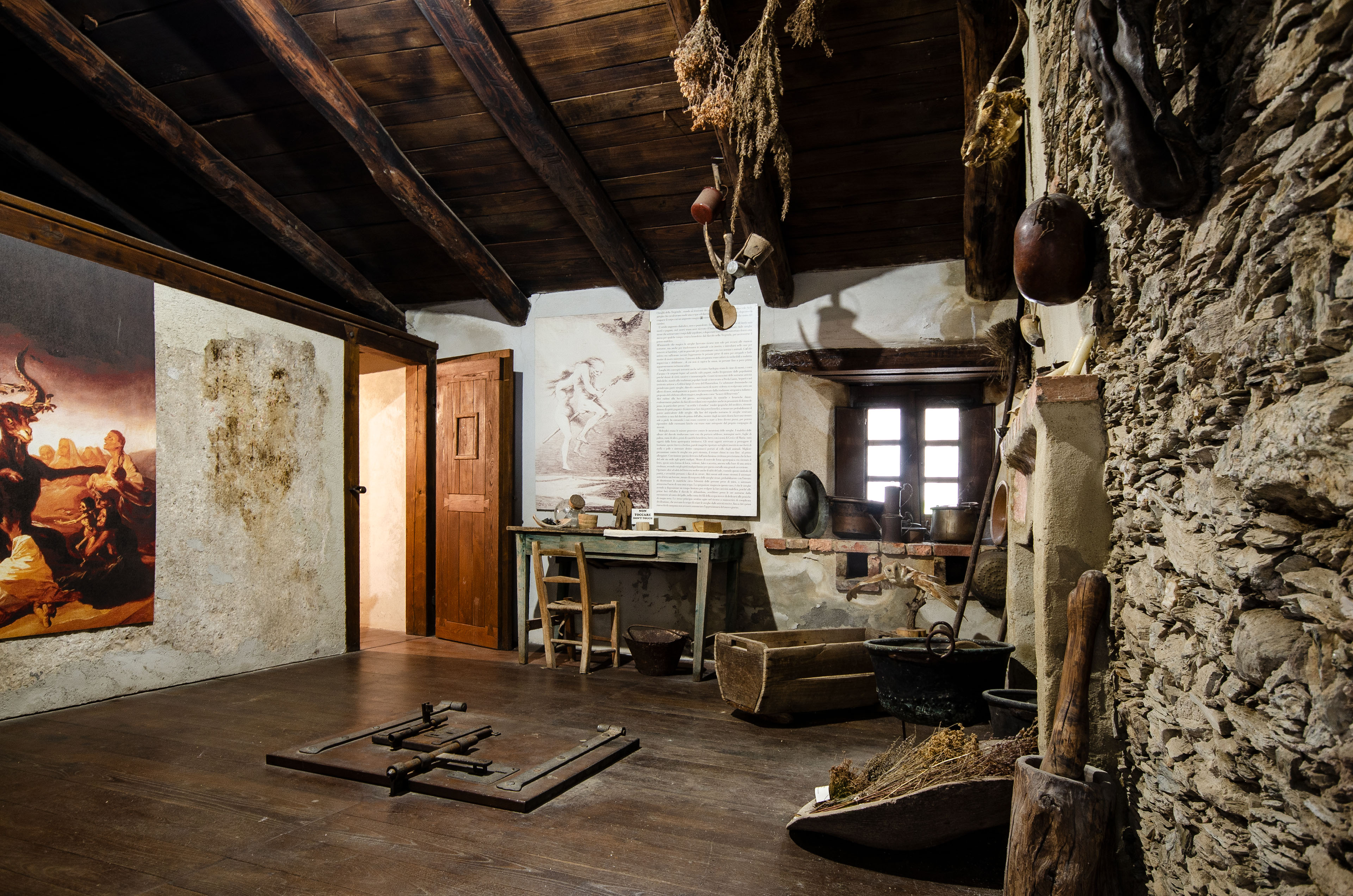
Today, this space hosts a striking permanent exhibition on witchcraft. The objects on display reveal ancient beliefs, dark rituals, and magical-religious practices. There are dolls made of fabric and cork, used for curses; sacred images and coins tied with thread in the shape of a cross, believed to be protective amulets; and small iron objects, such as a sickle—since witches were thought to fear iron.
Also present are goat skulls, evoking the image of the devil, and small vials said to contain oils used in curses. A cradle with a barn owl recalls an ancient belief: it was thought that witches could transform into nocturnal birds to suck the blood of newborns and use their flesh to create magic ointments to fly and become invisible.
Of course, no exhibition on witches would be complete without the famous broomsticks, believed to be used to reach the tregenda—nighttime gatherings held in remote places: mountain peaks or riverbanks. There's also bone dust, said to be scattered in courtrooms or under judges’ chairs to escape sentencing. Finally, salt—a symbol of purity—was considered a powerful protection against dark forces.
Each object on display tells a fragment of a story shaped, over centuries, by fear, superstition, and persecution.

This room has served many purposes over time: it was once a cell, a meeting room for interrogations with the judge, the prison's archive, and later even a private home. Today, it is known as the Chamber of Torment, where torture was inflicted.
Torture was a common practice of the Inquisition, used to extract confessions from those accused of heresy or witchcraft. In Sardinia, the three most frequently used methods were the garrucha (pulley), the toca (water torture), and the potro (rack).
In the garrucha, the victim was suspended by the wrists, with arms twisted behind the back, using a pulley fixed to the ceiling. The inquisitors would hoist them up, suddenly let them drop, or violently jerk them, causing the limbs to dislocate.
The toca involved tying the victim to a table, inserting a cloth down their throat, and forcing them to drink up to eight liters of water. When the person began to suffocate, the cloth was removed and they were ordered to tell the truth.
The potro was a wooden rack to which the victim was strapped with cords. The torturer would tighten the ropes progressively, stretching the body until unbearable pain was inflicted.
Psychological torture was also employed. The accused might be forced to wear the sambenito, a penitential garment marked with a red cross, identifying them as guilty of religious crimes. They could be made to attend public masses, exposed naked to public humiliation at the pillory, or paraded around the village on a donkey wearing a tall pointed hat called the coroça, as part of a ritual of shame.
After torture, the sentence was pronounced and carried out by the "secular arm" (civil authorities). If condemned to death, the prisoner was given one last chance to repent. If they did, they were strangled before being burned. If they refused, they were burned alive.
Multimedia