Place details
Museo Mura
Antonio Mura (Aritzo, 1902 – Florence, 1972) was one of the most important Sardinian painters and engravers of the twentieth century. After completing classical studies in Cagliari, he received his artistic training in Rome, attending the Royal Academy of Fine Arts and the English Academy, where he came into contact with masters such as De Carolis and Cambellotti. He furthered his education by traveling to Florence, Venice, and Milan, visiting Italy’s major museums.
He first exhibited in 1933 in Cagliari and later took part in major national exhibitions, including the Venice Biennale and the Rome Quadriennale. His artistic production ranged from portraits to landscapes and still lifes, but it was in sacred painting that he found his most significant expression, creating numerous altarpieces in Sardinia and in Rome.
After the war, he settled in Cagliari, where he taught with passion and was remembered for his kindness and humanity. Mura is still celebrated today in Aritzo, where he is affectionately known as su pintore (“the painter”) or su professore (“the teacher”).
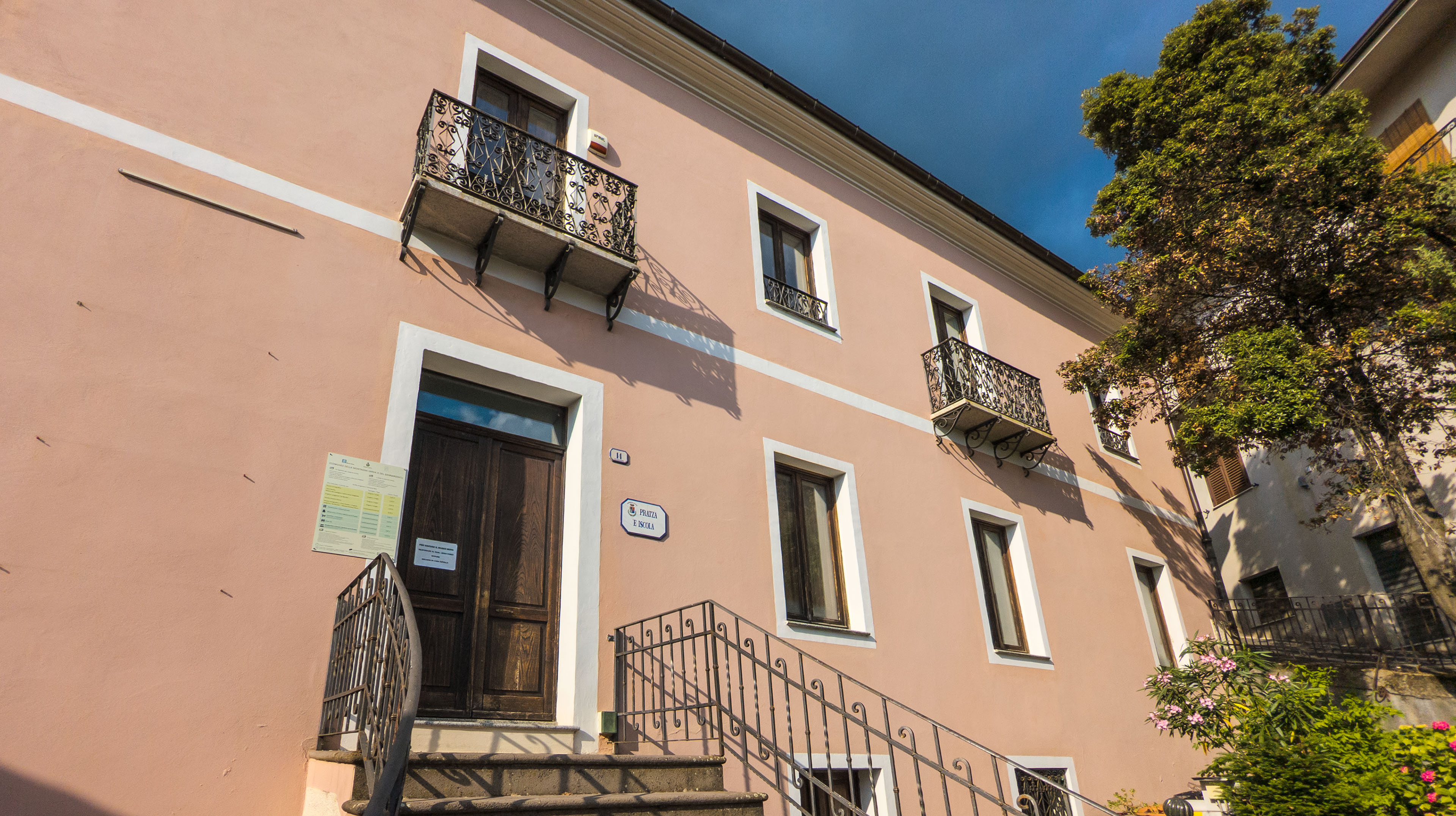
The museum is housed in the former town hall, where the school once occupied the first floor.
Via Funtana Tolu, 4, 08031 Aritzo NU, Italia
Map
Visit guide

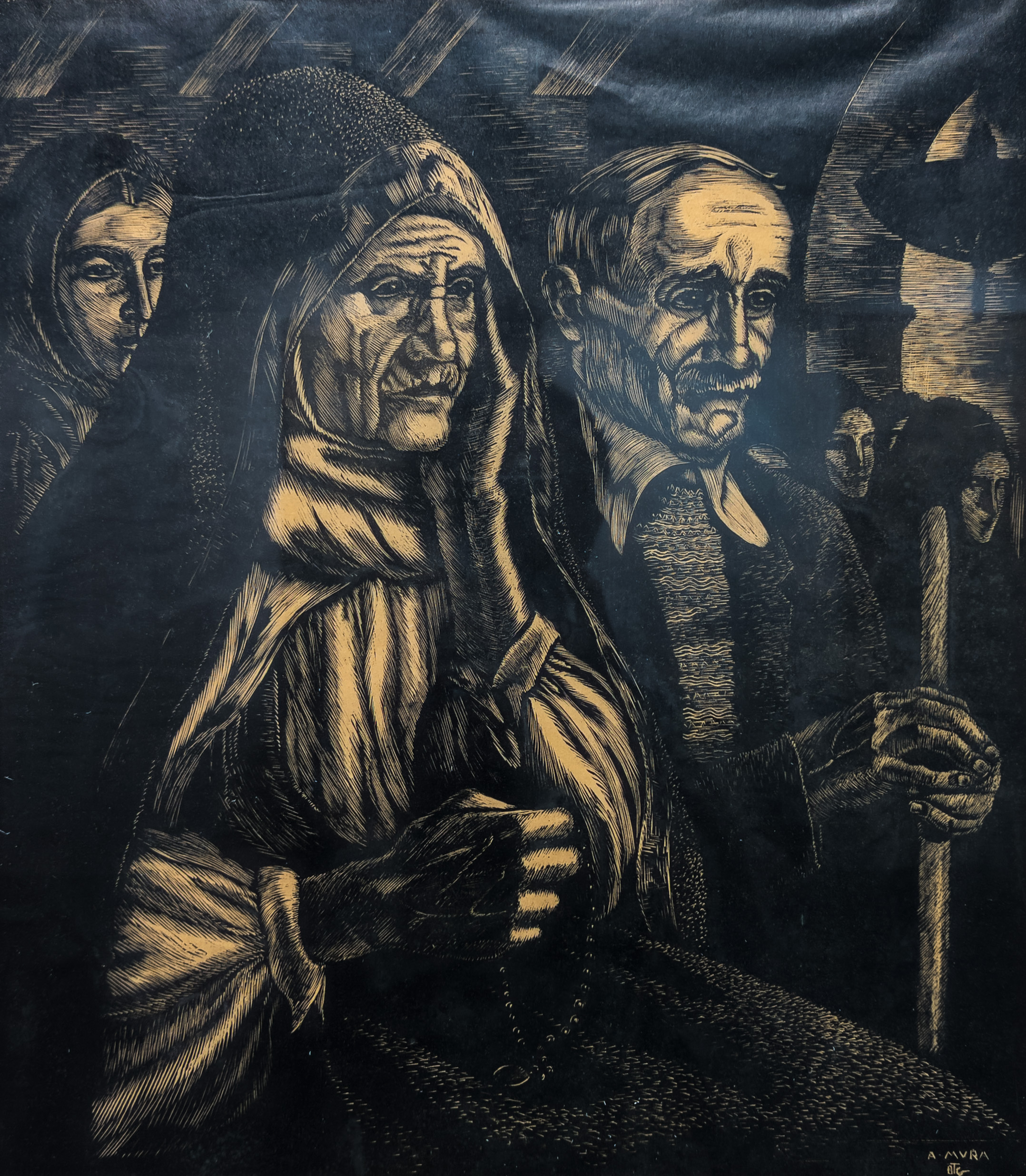
In this room, two types of works by Antonio Mura are on display: woodcuts and preparatory cartoons.
The woodcuts highlight the artist’s skill as an engraver. This technique consists of carving a wooden block in relief, removing the parts that are not part of the design. The resulting matrix is then inked and printed on thin sheets of paper or on silk, allowing multiple copies of the same subject to be produced.
Mura belongs to the group of Sardinian engravers, together with Mario Delitala, Battista Ardau Cannas, Remo Branca, and Stanis Dessì. Woodcut is an ancient, laborious, and “humble” technique, yet noble for its immediacy and the speed with which the work takes shape.
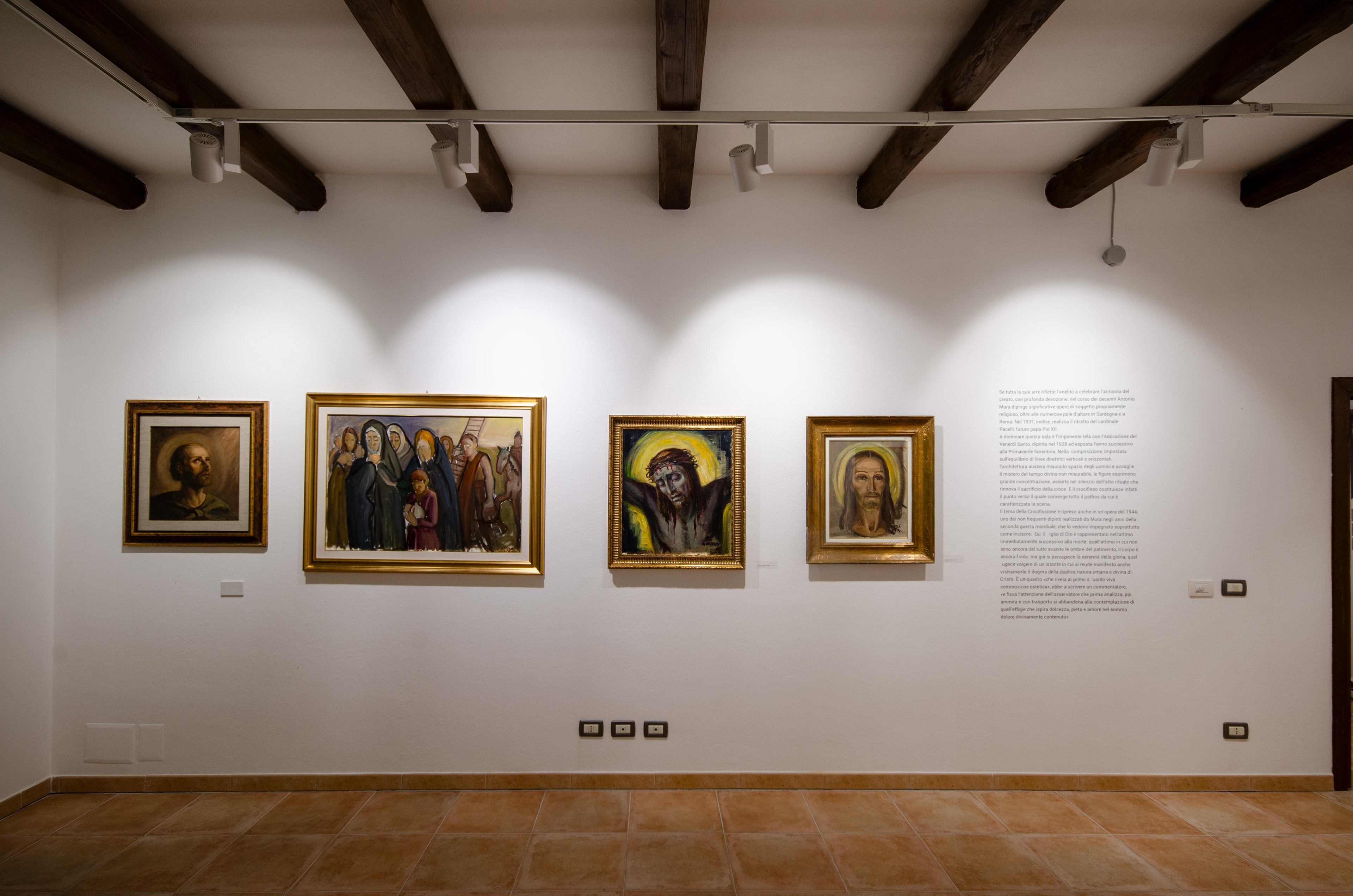
Many of Mura’s subjects, both in painting and engraving, are drawn from the most intense moments of the New Testament, such as the Way of the Cross, the Pietà, or the Mourning Marys.
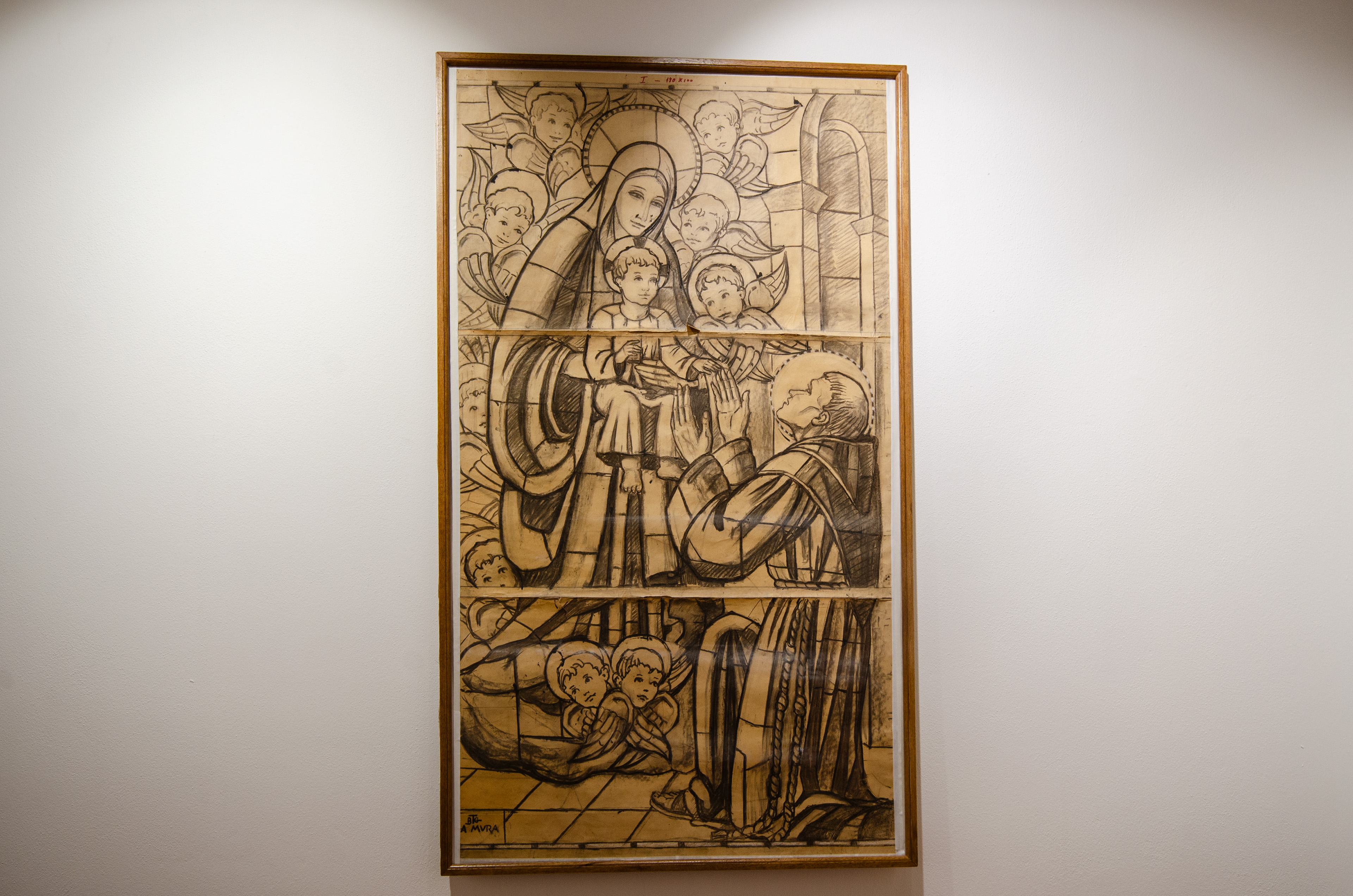
The preparatory cartoons are preliminary drawings made in charcoal on rigid supports. They were used to transfer figures onto the canvas with a technique called “pouncing”: the outline of the drawing was pricked with a needle, and colored powder was then dusted through the holes, leaving an imprint to follow.
These cartoons depict some scenes from the life of Saint Anthony of Padua.

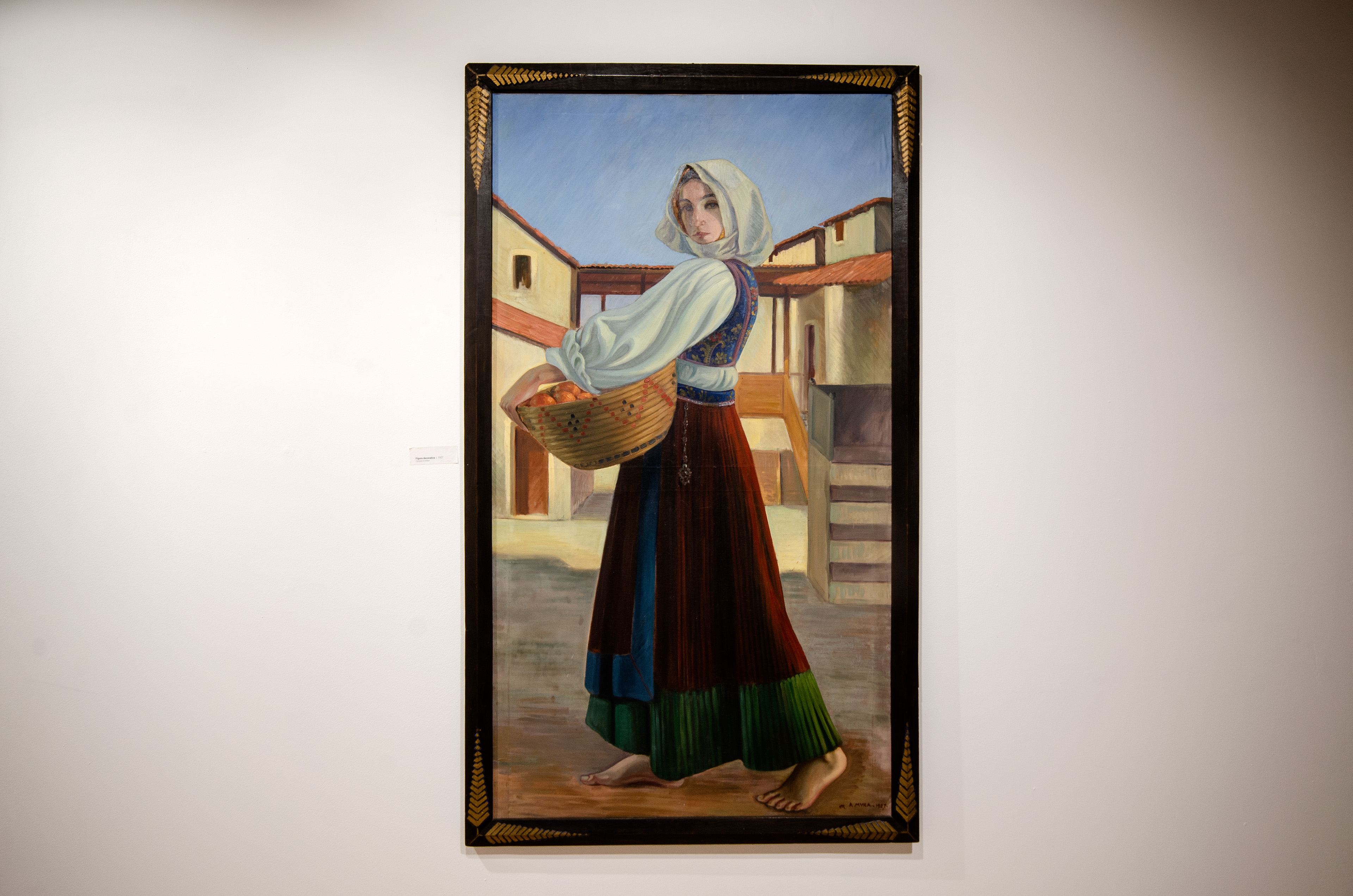
Here we are welcomed by the figure of a young woman carrying a basket of oranges, almost as if to introduce us to Antonio Mura’s pictorial world. A world deeply rooted in the identity of Aritzo, yet open to a new and original aesthetic experience, nourished by a solid visual culture.
The 1927 work Decorative Figure depicts a majestic woman standing among the white houses illuminated by the sunlight of a village street. Her outline is sharp and defined, while the light caresses the white sleeves of her shirt and slips into the folds of her carmine skirt.
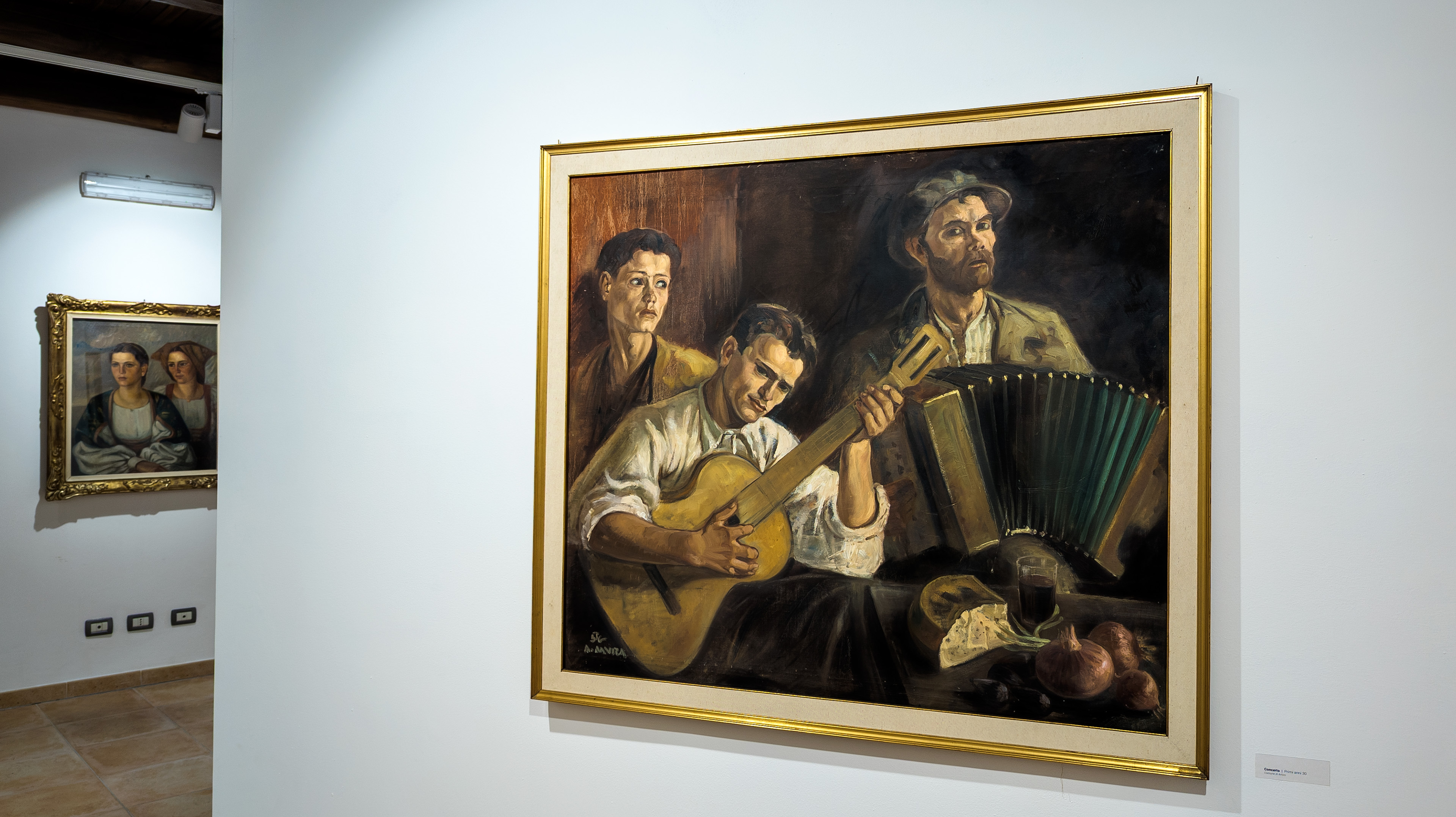
Against a dark, undefined background, we find the figures of musicians in the painting Concert, dating to the early 1930s. In the foreground, a still life reveals the hidden sacredness within the humility of everyday life: bread and wine, Eucharistic symbols, evoke spirituality and tradition.
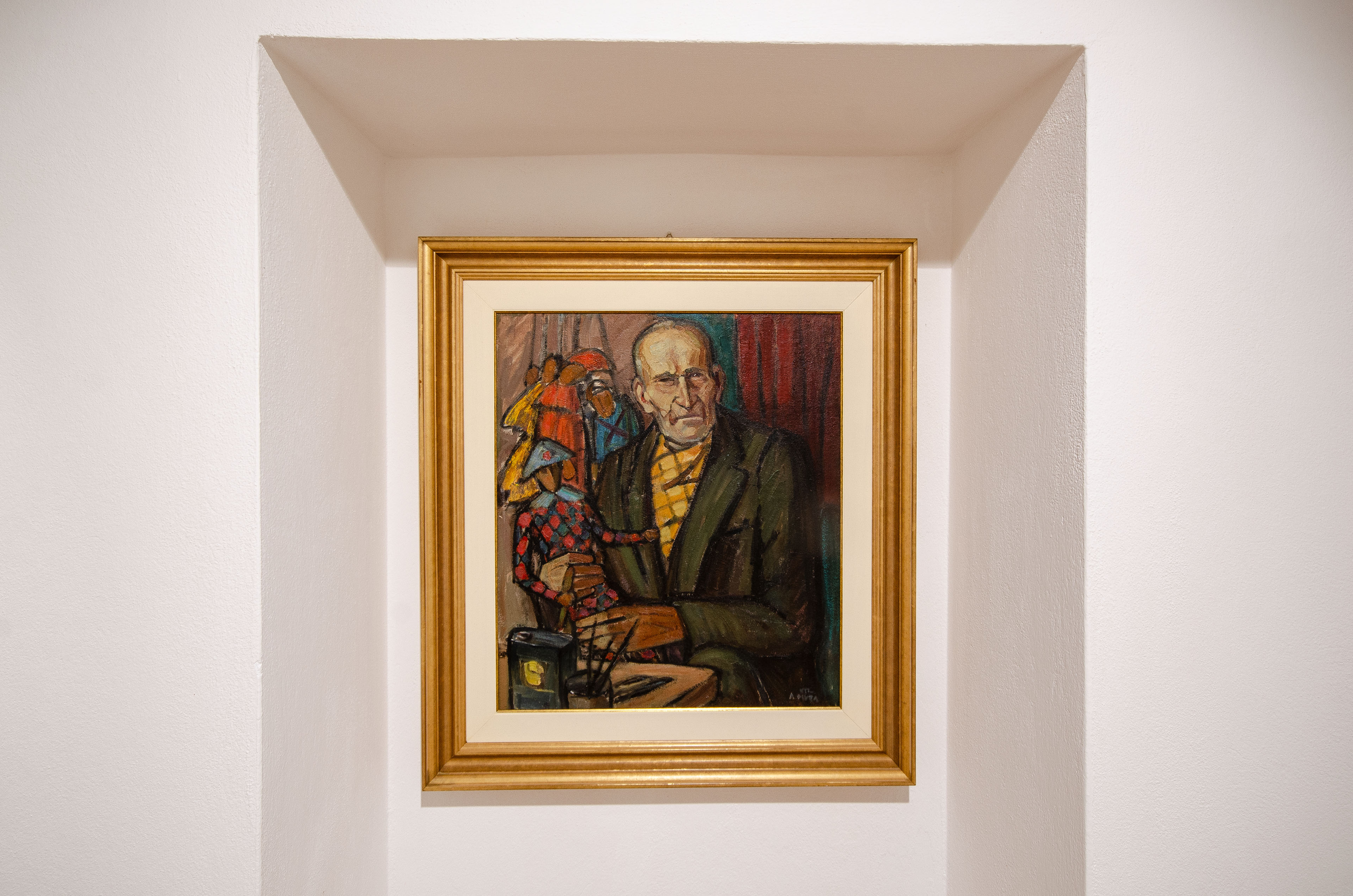
The other works on display—figural compositions, landscapes, and still lifes—illustrate Mura’s artistic journey, ranging from Baroque references of the 17th century to touches of modernity. Over time, his painting becomes increasingly synthetic, and color takes on expressive freedom, conveying profound emotions rooted in a solid cultural foundation.
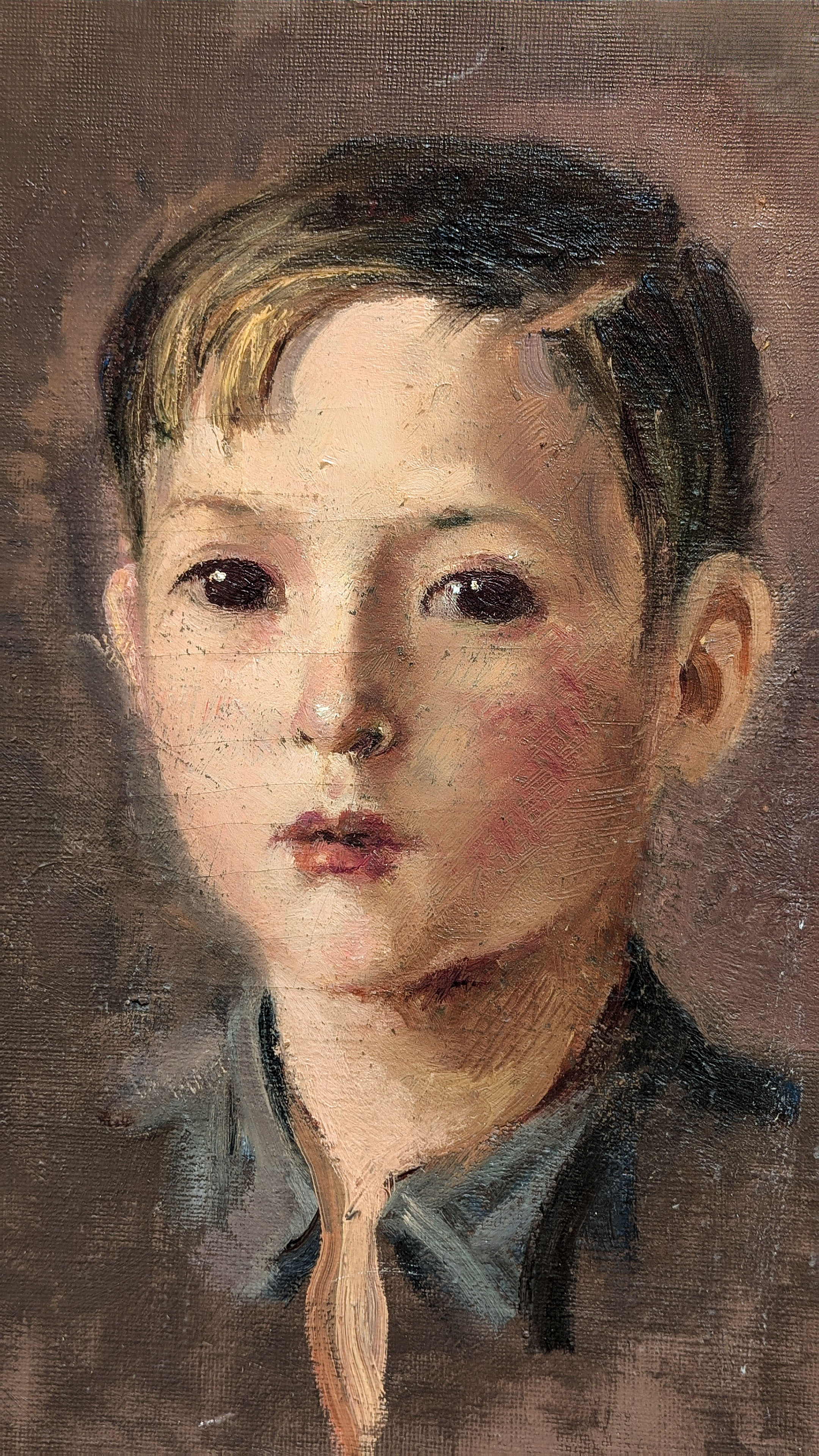
In the 1950s, the scholar Nicola Valle described his art as “compendiary painting,” recognizing Mura’s stylistic evolution. Valle, who had recorded the painter’s first solo exhibition in 1933, also emphasized the importance of portraits in his work, particularly those of children, regarded as the creatures closest to God.

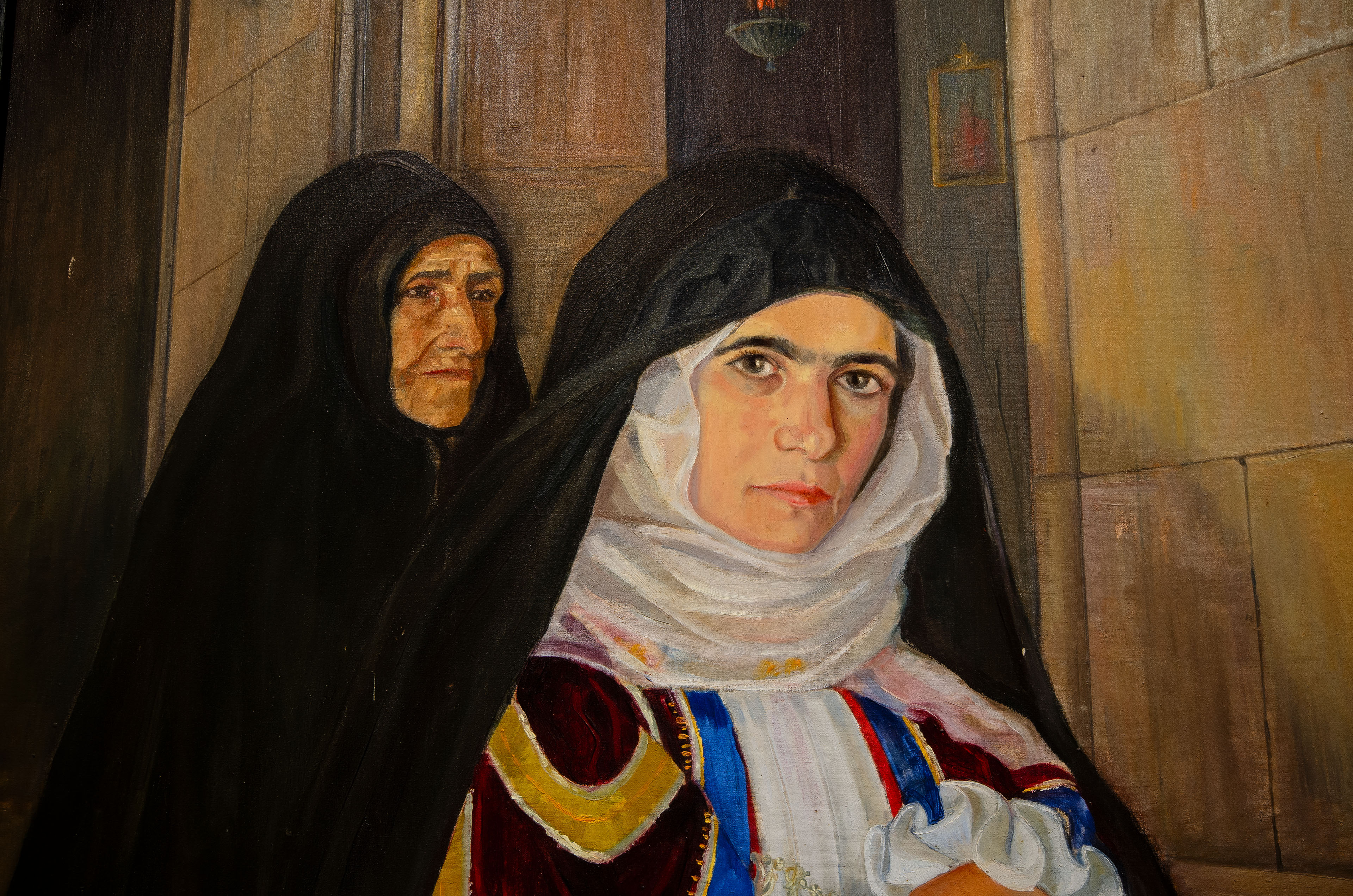
Antonio Mura devoted great care and sensitivity to the representation of the female universe, to which this room is dedicated. The works unfold like a fascinating frieze of life, embracing every age: from childhood to old age, passing through youth, full of hope.
A discreet and silent hope runs through the painting The Bride, created in 1924. The following year, the work was selected by the jury and exhibited at the 3rd Rome Biennale, alongside the works of great masters of the Academy of Fine Arts.
At the center of the canvas we see a young woman kneeling, dressed in traditional costume, inside the parish church of San Michele Arcangelo in Aritzo. Behind her, an elderly woman adds depth to the space and solidity to the architecture. The girl’s dark, shining eyes stand out against the white veil framing her face, while the reds, yellows, and blues enliven the entire composition. In her hands she holds a precious rosary, painted with meticulous detail, yet the atmosphere conveys a sense of simple, familiar purity.
In the other works of this room, which reflect the different stylistic phases of Mura’s career, the artist captures fleeting gestures and delicate, barely revealed feelings. His portraits, as always, do not seek outward appearance but essence, revealing the sacredness of life itself. Even the settings, often humble domestic interiors, evoke something deeply religious and spiritual.

If all of Antonio Mura’s art reflects a deep yearning to celebrate the harmony of creation, it is in his religious works that this devotion finds its most powerful expression. Over the decades, the artist created numerous altarpieces, both in Sardinia and in Rome, and in 1937 he also painted a portrait of Cardinal Eugenio Pacelli, the future Pope Pius XII.
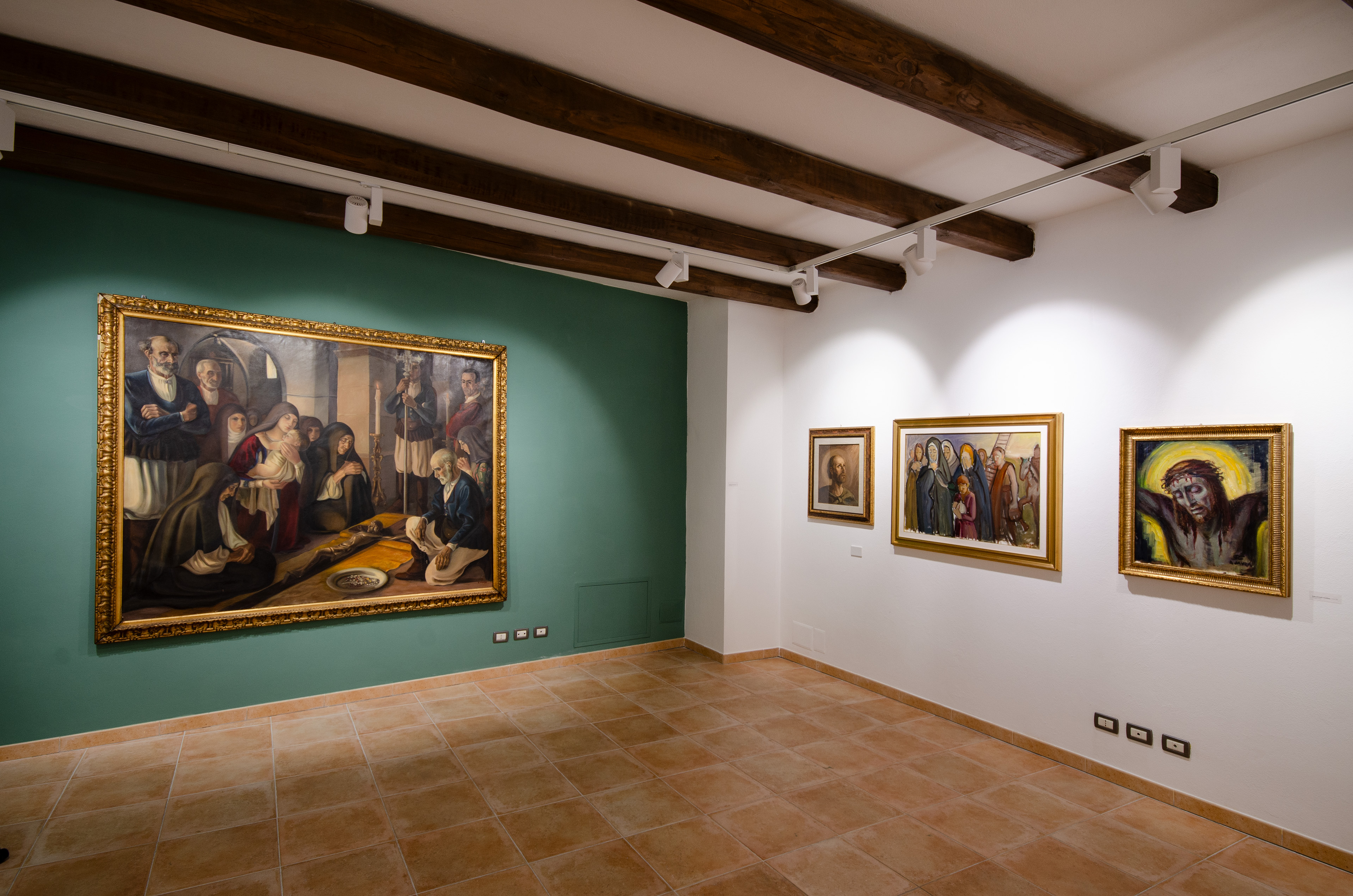
At the center of this room stands the large canvas The Adoration of Good Friday, painted in 1928 and exhibited the following year at the Primaverile Fiorentina. The composition is built with rigor, balancing vertical and horizontal lines. Its solemn and austere architecture defines the earthly space while embracing the mystery of divine time—a time that cannot be measured. The human figures appear contemplative, immersed in the silence of a sacred moment: the rite that renews the sacrifice of the cross.
The Crucifix, the focal point of the scene, becomes the convergence point of the pathos running through the entire work. Displayed alongside are the preparatory cartoons, which allow visitors to appreciate the artist’s creative process.
From 1927 onward, Mura began signing some of his works with the letters BTG, an acronym for Beata Teresa of Jesus, in homage to Saint Thérèse of the Child Jesus, to whom he was deeply devoted. This detail not only reveals the intimate and spiritual dimension of his art, but also helps to date many of his works more precisely.
Multimedia