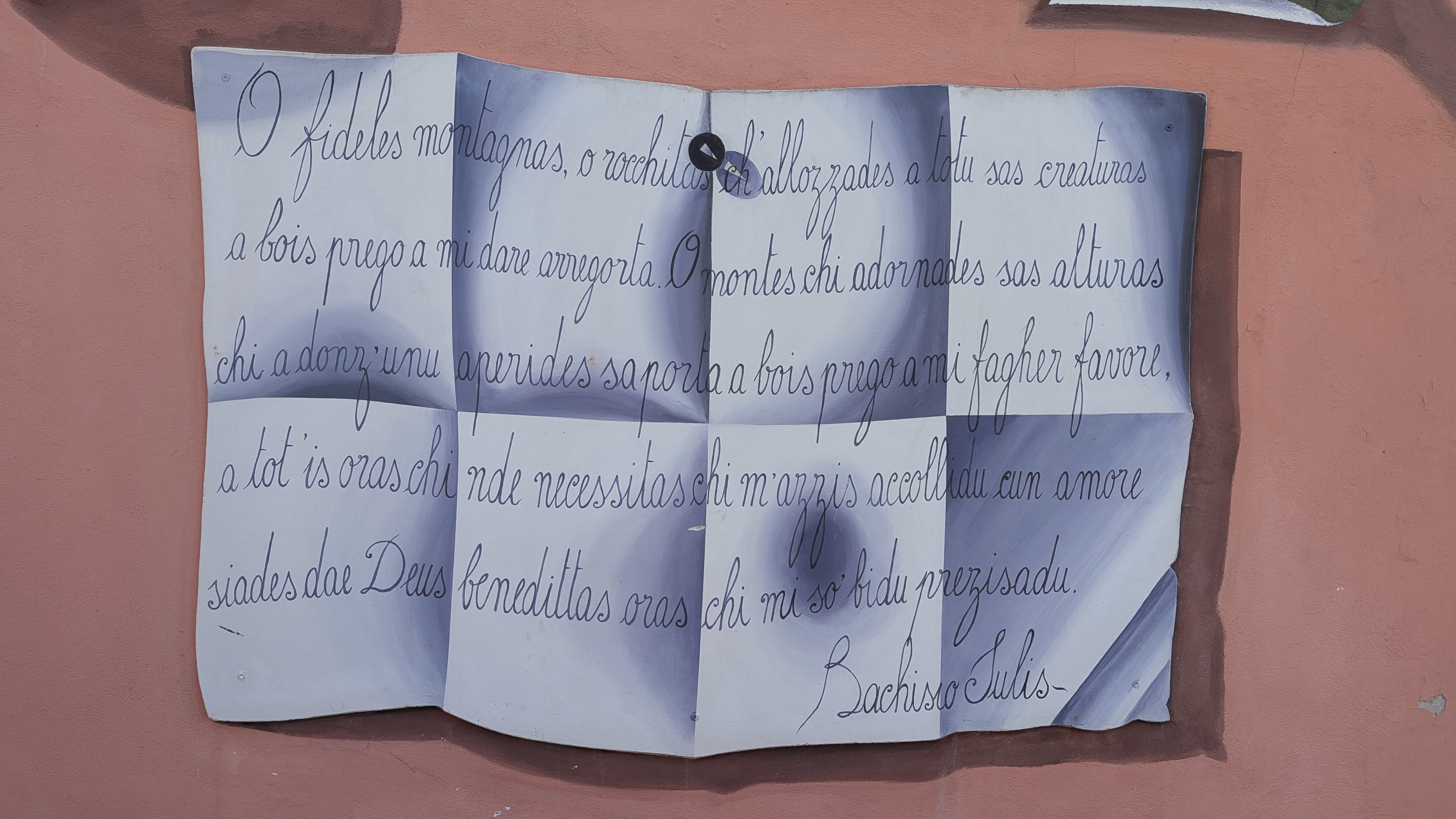
Bachisio Sulis
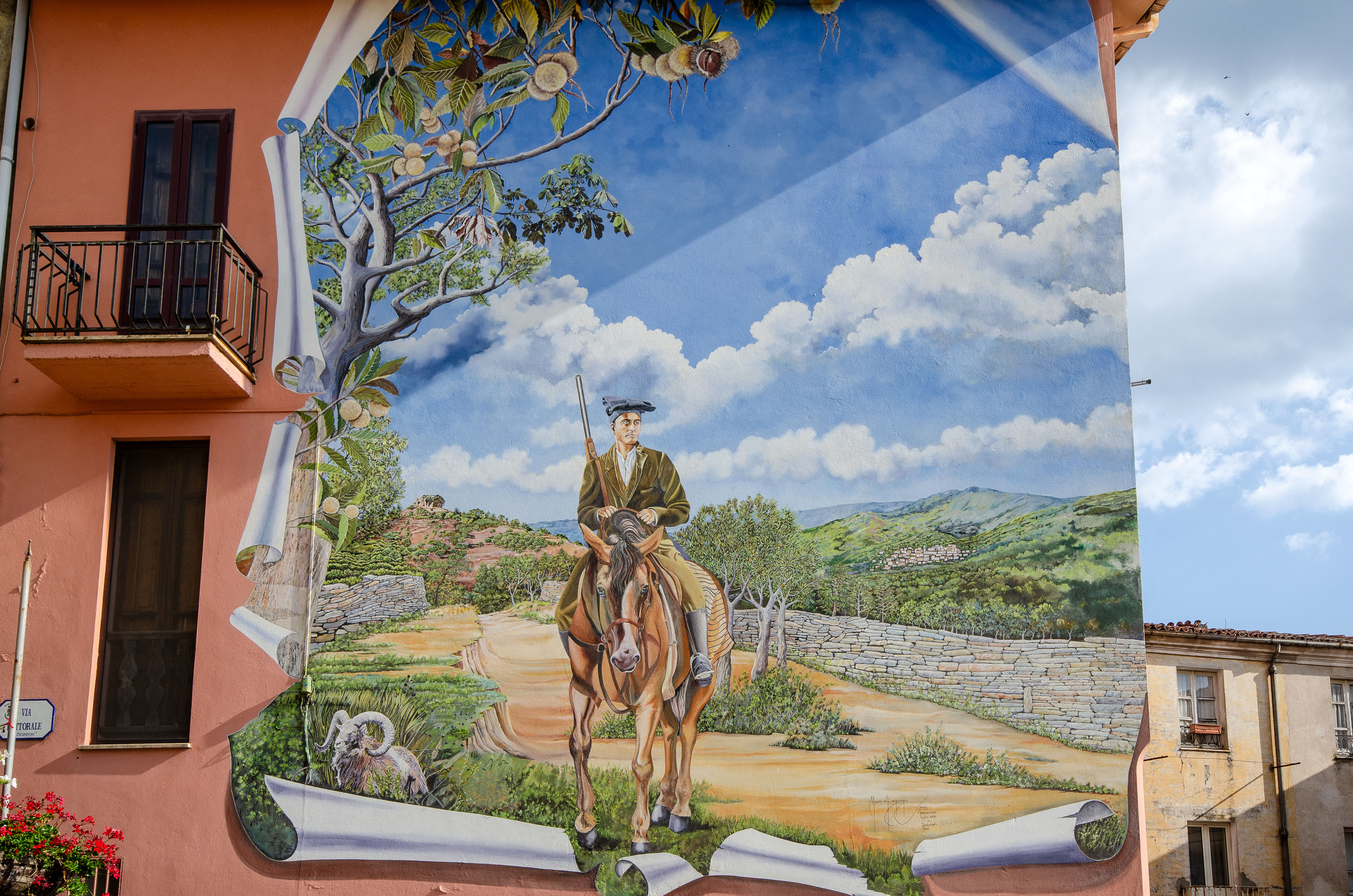
Bachisio Sulis, an emblematic and rebellious figure who moved freely between poetry, politics, and legend, was born in Aritzo in 1795. A cultured man, passionate about literature and philosophy, he began his career as a primary school teacher at a very young age, standing out for his free and nonconformist thinking. In an era when words were feared almost as much as weapons, Sulis chose poetry as his tool of struggle, protest, and consolation.
In 1818, at just twenty-three, he was unjustly accused of taking part in an attack against the authorities. It was the beginning of a long ordeal: to escape conviction, he was forced to take refuge in the mountains of the Gennargentu, where he remained an outlaw for twelve years. During this time, he lived as a bandit, but never abandoned his true nature: he wrote, observed, and composed verses that echoed the social unrest of 19th-century Sardinia.
His poems in the Sardinian language are intense and biting, full of sarcasm, courage, and political awareness. With sharp irony, he struck at the powerful, denounced the arrogance of the wealthy, unmasked social hypocrisy, warned against betrayal, and comforted those who, like him, chose marginalization over submission. His poetry, passed down orally or entrusted to pages now lost, became the voice of the people and a symbol of intellectual resistance.
But Bachisio Sulis was not only the rebel poet. His verses also reveal the sensitivity of a man in love, as shown in the poems dedicated to Elena, a young aristocratic woman he deeply loved but could never marry. To her he entrusted tender, melancholy words, the testimony of a thwarted, perhaps impossible love that was never forgotten. At the same time, his poetry often took on an educational tone, addressing bandits with advice, warnings, and moral rules of conduct—a kind of code of honor for those living on the margins of the law.
After twelve years of forced exile, Sulis finally obtained a pardon and returned to Aritzo in 1830. But his life was already marked: freedom did not last long. He died on July 8, 1838, at the age of 43, the victim of an ambush in the courtyard of the Devilla house.
His death marked the beginning of a period of oblivion. Many of his writings were lost, making the memory of his work fragile and fragmentary.
And yet, some verses survived—passed on orally, copied in secret, later rediscovered by scholars and enthusiasts. In those surviving fragments, one can still hear the sharp tone of protest, the tender melancholy of love, the dignified strength of someone who chose not to bow down. Over time, Sulis became a symbolic figure: a “bandit poet,” but also a righteous man who paid for his freedom of thought with exile and death.
Today, Bachisio Sulis is recognized as one of the most original voices of 19th-century Sardinian literature.
Multimedia